KREUL is a family business from the German region of Franconia and Germany’s oldest factory for artists’ paints. It develops and makes all its paints at one factory in Hallerndorf. From SOLO GOYA acrylic paints and JAVANA fabric paints to MUCKI finger paints for children aged 2 and over.
KREUL Red-Gold Decorative Foil, Flowers, 140 x 140 mm, Set of 6
Sale price €4.89Regular price €6.99
KREUL
KREUL product ranges
What KREUL makes
Fourteen KREUL ranges available from us: from studio acrylic paints and fabric, glass and porcelain paints to MUCKI paints for children. For each range, we explain what it is suitable for, its features and a tip from the manufacturer.
For artists
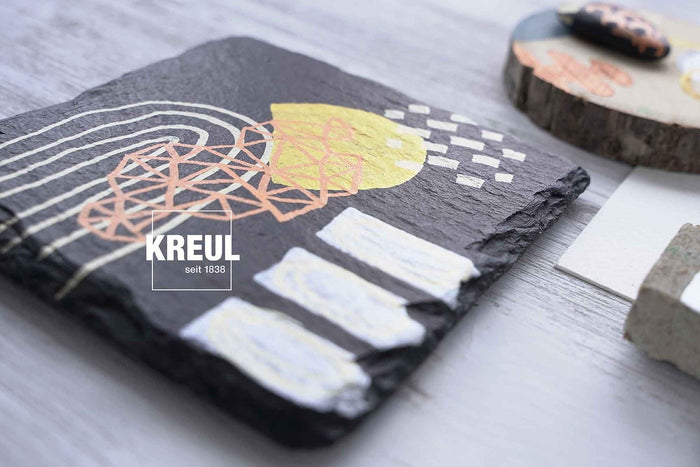
Water-based, student-grade acrylic paints, pouring and texture mediums, and acrylic markers. KREUL recommends SOLO GOYA Acrylic for school, study, work and leisure.
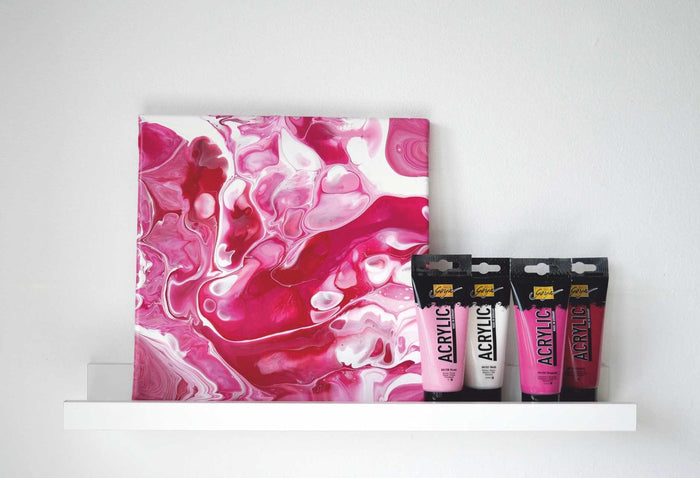
SOLO GOYA Acrylic
Highly pigmented, student-grade artists’ acrylic paint with a soft, creamy consistency and medium viscosity. It dries quickly and evenly to a matt finish and is water-resistant when dry. Suitable for canvas, paper, cardboard, wood, stone, metal, leather and many plastics.
100 ml tubes and 250 ml bottles
Water-based, can be thinned with water, shades can be mixed together
Very good coverage, lightfast pigments
Made in Germany
A tip from KREULWant a thicker paint? Mix in SOLO GOYA Universal texture paste and apply with a palette knife, though this will make the shade lighter. Texture gel will not change the shade, but the paint will dry glossy.
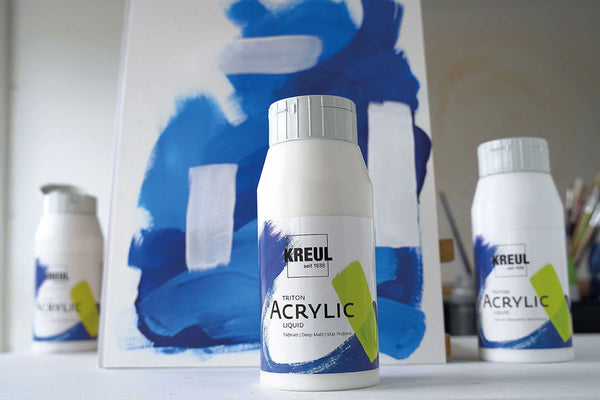
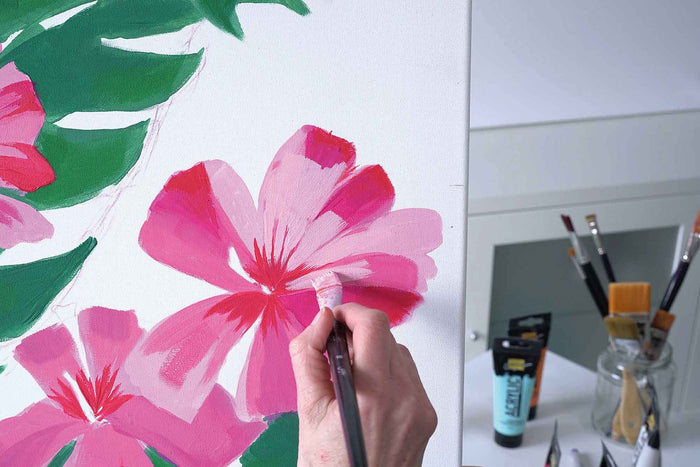
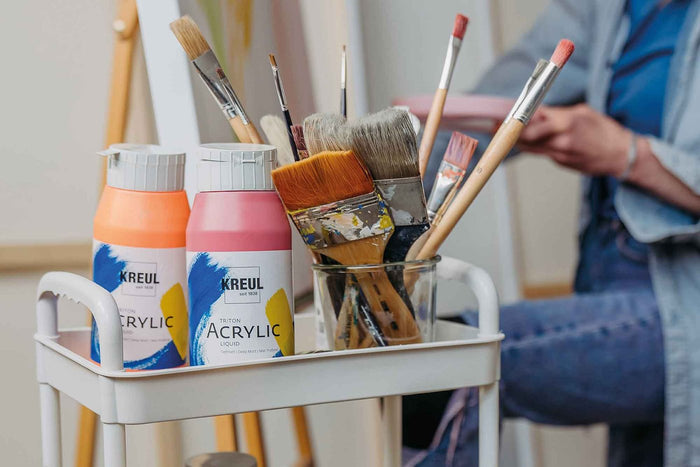
Fluid, student-grade artists’ acrylic paint that spreads easily, even over large areas. It dries evenly to a deep matt finish, making it suitable for underpainting, glazes and painting in several layers. Use it on paper, wood, canvas, cardboard, stone, metal and many plastics.
750 ml bottles; mixing white also available in 2 500 ml
Water-based, dries quickly, lightfast and lime-resistant
For indoors and outdoors; weather-resistant when dry
Bottle made from 40% and cap from 96% recycled material
A tip from KREULShake the bottle thoroughly before use; shake light shades for longer than dark ones. A transparent layer on top does not mean the paint has gone off: the heavier pigments have simply settled at the bottom.
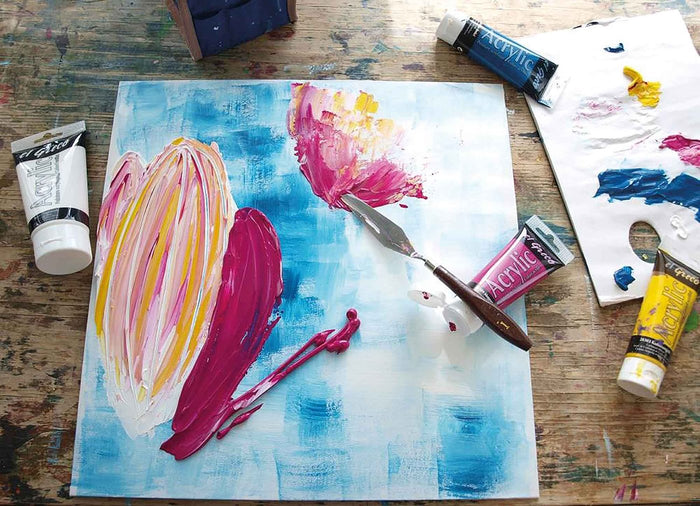
Highly pigmented, student-grade acrylic paint with a buttery consistency, ideal for impasto painting with a brush or palette knife. It can be used for opaque or translucent painting, dries quickly to a glossy finish and forms a water-resistant, flexible film. Suitable for canvas, cardboard, paper, stone, metal, leather and many plastics.
75 ml and 150 ml tubes, plus sets of 12 ml tubes
Glossy finish when dry
Water-based, can be thinned with water, shades can be mixed together
Vibrant, lightfast and opaque shades
A tip from KREULTo thin thick el Greco paint, KREUL recommends SOLO GOYA Pouring-Fluid: it is as glossy as the paint, giving the picture a consistent finish.
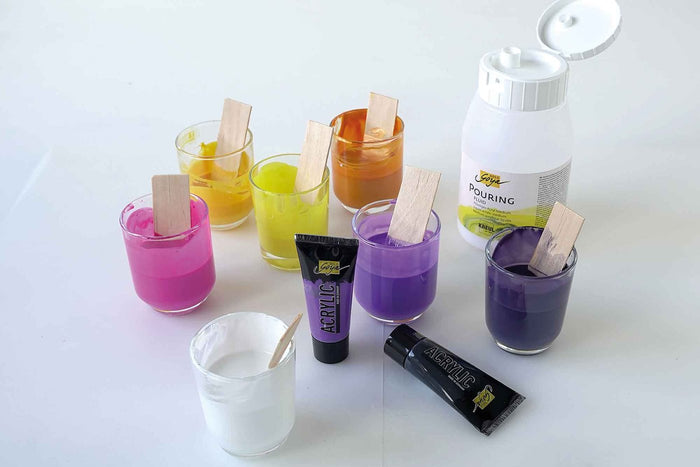
Pouring-Fluid is a fluid acrylic medium for pouring and dripping techniques: it improves the flow of acrylic paints without changing their vibrancy and can also be used on its own as a transparent, high-gloss varnish. Gesso with an acrylic, semi-chalk base seals the pores of canvas, cardboard, paper and wood. Texture pastes and gels add relief to your picture.
Pouring-Fluid in 150, 250, 500, 750 and 2 500 ml
Pouring-Fluid is formulated for SOLO GOYA Acrylic and can be mixed with paint in any ratio
White and black Gesso; water-resistant when dry
Universal texture paste dries to a white, matt, opaque layer
A tip from KREULPouring-Fluid also works as a glossy finish: varnish a dry matt acrylic painting with it at the end to give it a gloss.
Acrylic markers with brilliant acrylic ink and a valve system for an even flow of paint. They dry to a satin matt finish, are weather-resistant on absorbent surfaces and do not bleed through paper. They write on canvas, paper, cardboard, wood, stone, plastic, metal and glass.
Fine 1–2 mm, medium 1–3 mm, edge 1–4 mm and XXL approx. 15 mm tips
Water-based, with high colour intensity and pigment density
Shake for 1 to 2 minutes before use and pump the paint onto paper
A blocked tip can be cleaned or replaced with a spare tip
A tip from KREULLeave painted stones to dry in the air for 3 days before displaying them outdoors, so the paint can cure properly. There is no need to varnish them.
JAVANA paints for cotton, linen and silk, batik dyes and fabric markers. JAVANA fabric and silk paints are water-based and become water-resistant when dry; they must be fixed if the fabric is to be washed.
JAVANA fabric paints
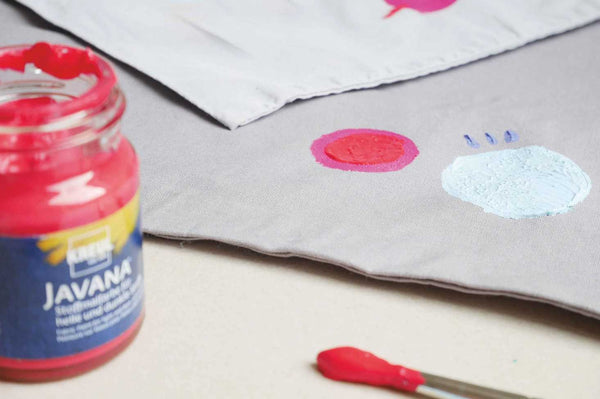
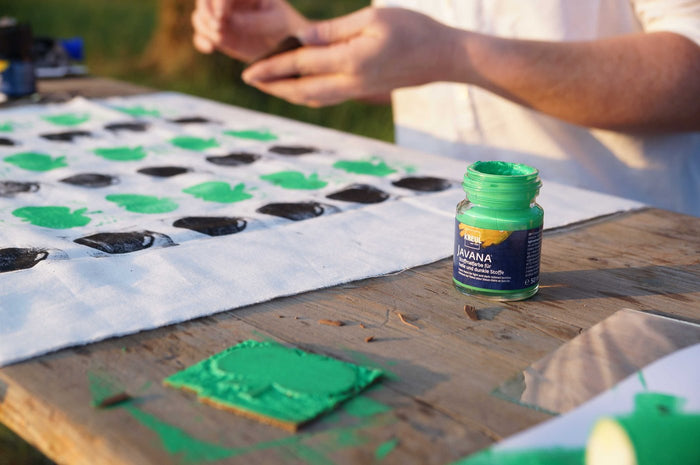
Two formulations to suit different fabrics. Paint for light fabrics is creamy, penetrates deep into the fibres and is suitable for brush painting and large areas. Paint for light and dark fabrics is thick and highly opaque, making it ideal for printing, stamps and stencils: it does not seep under the stencil and captures even fine stamp details.
Available in 20, 50, 250 and 500 ml
For light fabrics: cotton, viscose and blends with up to 20% synthetic fibres; wash inside out at up to 60 °C
For light and dark fabrics: fix with an iron for 5 minutes or in an oven for 8 minutes at 150 °C; wash inside out at up to 40 °C
Water-based, lightfast
A tip from KREULWash the fabric first to remove any finish, without using fabric softener, and place baking paper between the layers of fabric.
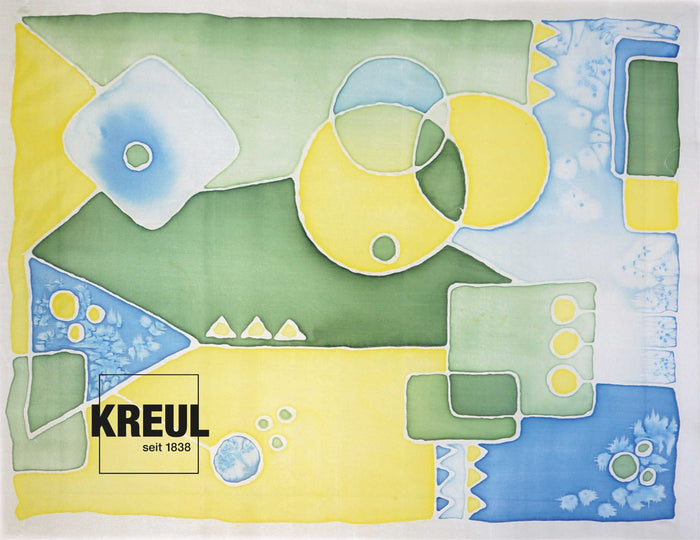
Highly pigmented silk paints with a fluid consistency that penetrates deep into the fibres. Suitable for outline, salt and watercolour techniques, airbrushing and spraying. As well as silk, they colour light cotton, viscose, linen and blends with up to 20% synthetic fibres.
50 ml and 275 ml bottles, sets of 6 × 20 ml
Shades can be mixed together
Fixing: after about 6 hours of drying, iron for 5 minutes on the cotton setting through a thin cloth
Water-based, lightfast
A tip from KREULFor an even shade over a large area, dampen the silk before painting. Apply the paint with a brush and let it spread freely.
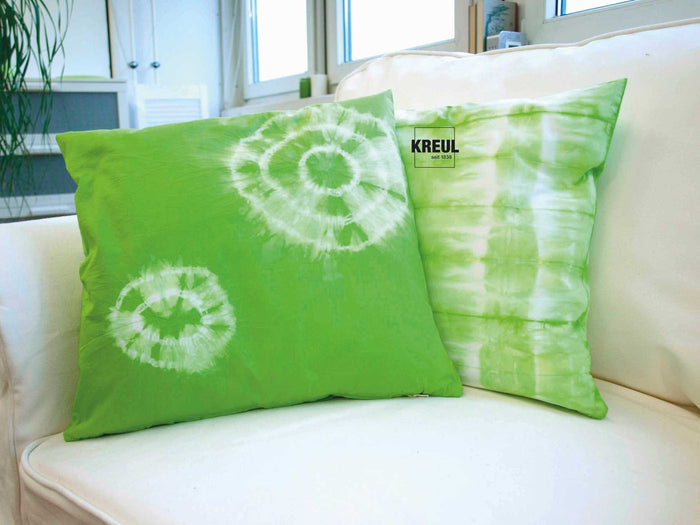
Ready-to-use dye powder, including dye salt, for colouring and batik-dyeing fabrics. It dyes at 50 to 95 °C in a bucket or saucepan on the hob, making it suitable for shibori (tying, folding and knotting), dip-dye, wax batik and tie-dye with spray bottles. It dyes silk, cotton, viscose, linen, half-linen, wool and polyamide.
70 g powder: intensely colours 200 g of fabric, or gives a medium shade on 400 g
Vegan, in a convenient dosing bottle
Not boil-proof: fabric will fade when washed; wash separately at max. 40 °C
Coloured fabrics must be bleached before dyeing
A tip from KREULDissolve the dye in an old saucepan or bucket that you no longer use for food: the dye can settle on limescale or in scratches and come loose later.
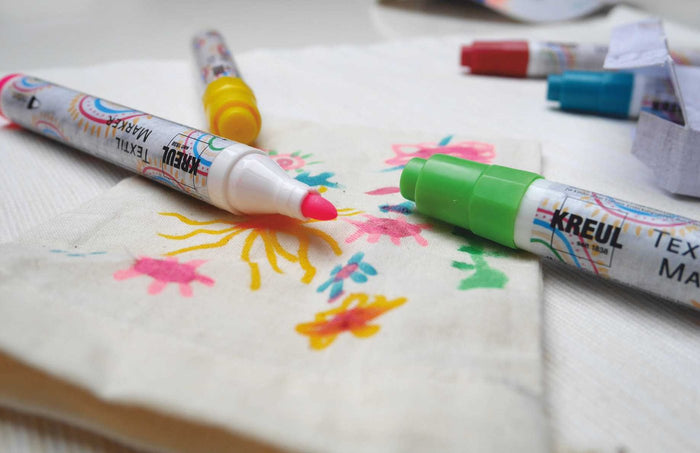
Markers with fabric paint for lines, lettering and smaller areas. Textil Marker medium writes straight away, without shaking or pumping, and is intended for light fabrics. Textil Marker Opak is opaque, so it also stands out on dark and coloured fabrics.
Medium tip approx. 2–4 mm, fine tip approx. 1–2 mm
Medium: leave to fix in the open air for at least 3 days; wash inside out at up to 60 °C
Opak: fix with an iron for 5 minutes or in an oven for 8 minutes at 150 °C; wash inside out at up to 40 °C
Opak in white and black can be refilled
A tip from KREULFor a smooth colour transition, paint the lighter shade first, then paint the next shade into it while it is still wet. Wipe the second marker’s tip clean on a paper towel afterwards.
Glass & Porcelain is baked in a domestic oven at 160 °C and is then suitable for the dishwasher. Paint Window Color pictures onto film and stick them onto glass, mirrors or tiles.
Glass & Porcelain: paints and markers
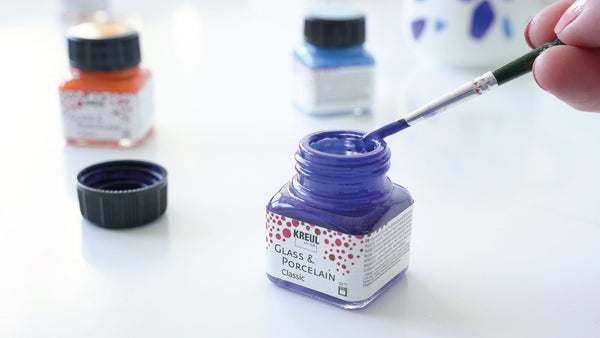
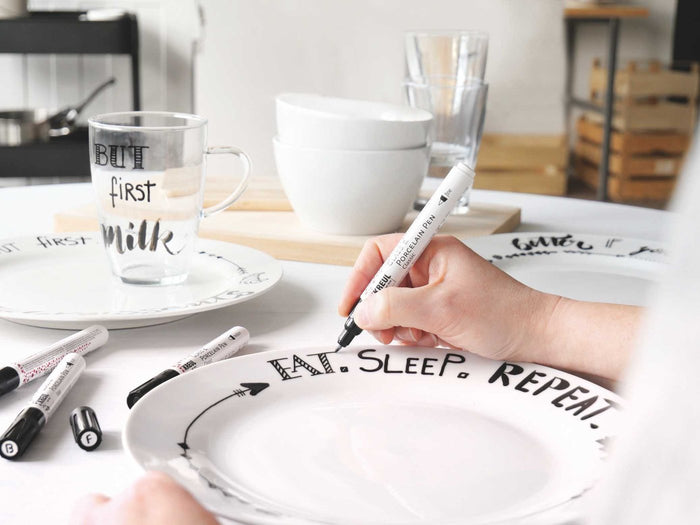
Water-based paints for decorating heat-resistant porcelain, glass, ceramics, terracotta and metal. Classic is opaque and glossy, Chalky is matt with a chalky look, and Clear is transparent like coloured glass; markers are also available. After baking in the oven at 160 °C, the decoration is water-resistant and suitable for the dishwasher.
20 ml pots; sets of 6 × 20 ml with a brush
Baking: after 4 hours of drying, bake for 90 minutes at 160 °C in an oven that has not been preheated; Clear markers for 30 minutes
Do not thin with water; use Glass & Porcelain thinner only
Paint only surfaces that do not come into contact with food; leave the areas you eat and drink from unpainted
A tip from KREULWash tableware by hand before painting, preferably with vinegar or a vinegar cleaner, not in the dishwasher: rinse aid and tablets can stop the paint from adhering properly.
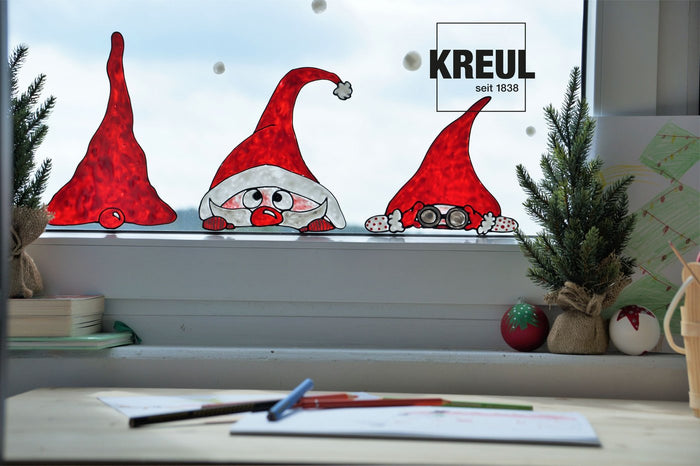
Vibrant window paint in a bottle with a fine, long nozzle. Paint your design onto special film, then peel it off once dry and stick it onto a smooth surface such as glass, a mirror or tiles. The pictures can be peeled off without leaving residue and used again.
80 ml bottles; also available in glitter, metallic and glow-in-the-dark shades
Outline dries in about 2 hours; coloured design in 24 hours
XXL set: 9 colours of 80 ml each, 80 ml black outline paint and special film
Meets the requirements of the current European Toy Safety Directive
A tip from KREULCreate a marbled effect by swirling the wet paints together with a wooden stick, such as a toothpick.
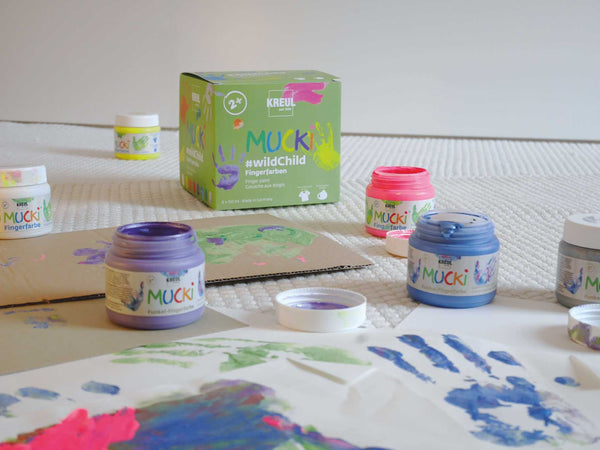
MUCKI finger paints are developed for children aged 2 and over, and Porcelain Marker Junior pens are for children aged 6 and over. According to the manufacturer, fixing in an oven or with an iron must be done by an adult.
MUCKI finger paints
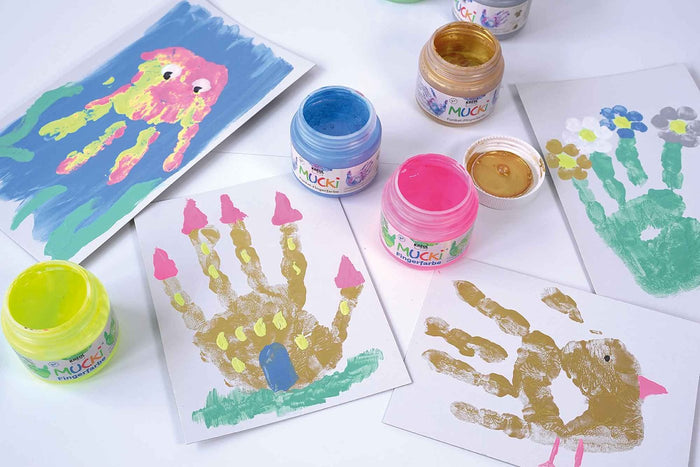
Vibrant water-based finger paints developed for children aged 2 and over, with a creamy, thick consistency for painting with fingers and hands. They are dermatologically tested, vegan and free from parabens, gluten, lactose and nuts. Bitter substances protect against accidental swallowing.
150 ml tubs and sets, such as #wildChild
Wash out easily at 30 °C and above
MUCKI for textiles: once fixed by an adult, it can be washed at up to 40 °C
MUCKI finger paints have received the ‘spiel gut’ award
A tip from KREULThe consistency also works well with stencils, stamps, rollers and brushes, so older siblings can join in too. Once dry, paint on a window can be brushed off with a dry hand or soft brush; wipe away any residue with a damp cloth.
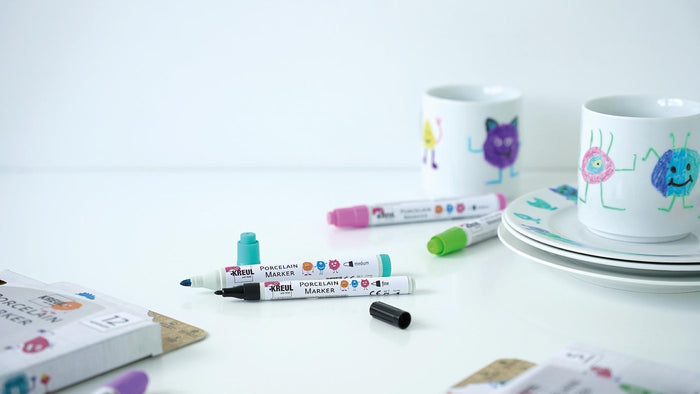
Markers for children with a large, durable fibre tip that write without shaking or pumping. Porcelain Marker Junior is for children aged 6 and over and is suitable for porcelain, ceramics and glass; Textil Marker Junior is for light fabrics. The formulations are dermatologically tested.
Tip approx. 2–4 mm
Porcelain: after 4 hours of drying, an adult bakes it for 90 minutes at 160 °C in a cold oven; the decoration is then suitable for the dishwasher
Fabric: leave to fix in the open air for at least 3 days; wash inside out at up to 60 °C
Paint only surfaces that do not come into contact with food; leave the areas you eat and drink from unpainted
A tip from KREULBefore the porcelain has been baked, simply wipe away any mistakes with water and start drawing again.
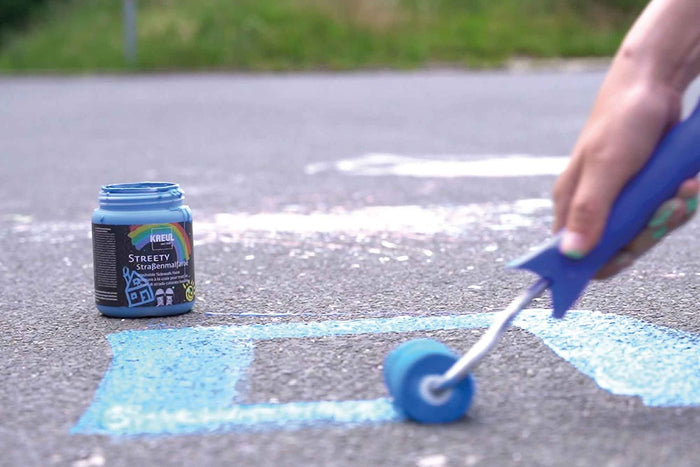
Washable liquid chalk for painting on asphalt and paving. Apply it with a brush or roller; it dries quickly and washes off with water and a brush. Do not use it on natural stone paving (testing in an inconspicuous area is recommended), and do not paint with it on public roads or pavements.
Sets with 120 ml and 200 ml tubs
Washes out of most fabrics at 30 °C and above
Dermatologically tested, vegan, paraben-free
‘spiel gut’ award
A tip from KREULDo not paint straight from the tub: pour some paint onto a paper plate to use as a palette and keep the paint in the tub clean.
SOLO GOYA and el Greco become water-resistant when dry; TRITON is weather-resistant
Light fabrics
JAVANA for light fabrics
iron for 5 min., wash inside out at up to 60 °C
Dark fabrics
JAVANA for light and dark fabrics
iron for 5 min. or oven at 150 °C for 8 min., wash at up to 40 °C
Silk
JAVANA for silk
iron for 5 min. through a thin cloth
Porcelain, glass
Glass & Porcelain
oven at 160 °C for 90 min.; Clear markers for 30 min.
Window, mirror
Window Color
dries in 24 h; design can be peeled off
Pavement
Streety
washes off with water and a brush
Information supplied by the manufacturer. Always follow the exact instructions on the product label.
Manufacturer’s tips
Step-by-step techniques from the KREUL blog
1
Pouring: paint that flows by itself
Mix one part SOLO GOYA Acrylic paint with three parts SOLO GOYA Pouring-Fluid until the mixture has the consistency of runny honey; do not add water, as the painting could crack. Place the canvas on upside-down cups so the paint can run off, and try the puddle pour technique to start: pour one shade as a base and add the others into it one by one. Ventilate the room before you start; the ideal temperature is 20 to 24 °C. Then keep the painting away from draughts. Depending on the thickness of the layers, it can take up to 72 hours to dry.
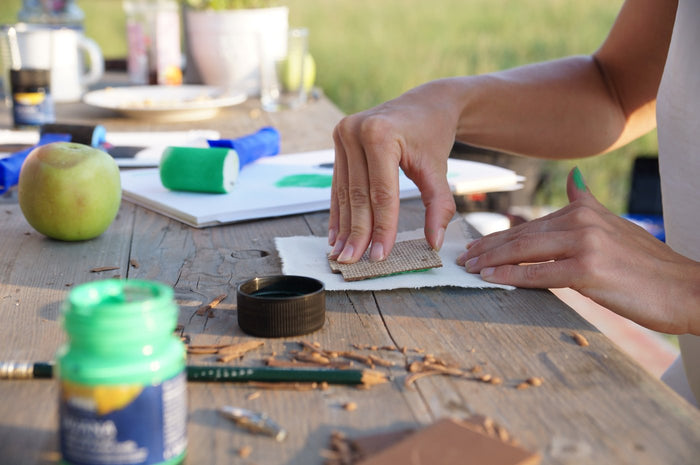
Wash the fabric first to remove any finish, without using fabric softener, and place baking paper between the layers. The thick JAVANA paint for light and dark fabrics covers dark backgrounds and does not seep under the stencil; you can thin it slightly with water for fine details, but this will affect its coverage. After 6 hours of drying, cover the fabric with baking paper and iron for 5 minutes on the cotton setting (this applies to an area about the size of A5), or fix it in the oven for 8 to 10 minutes at 150 °C. Then wash inside out at up to 40 °C.
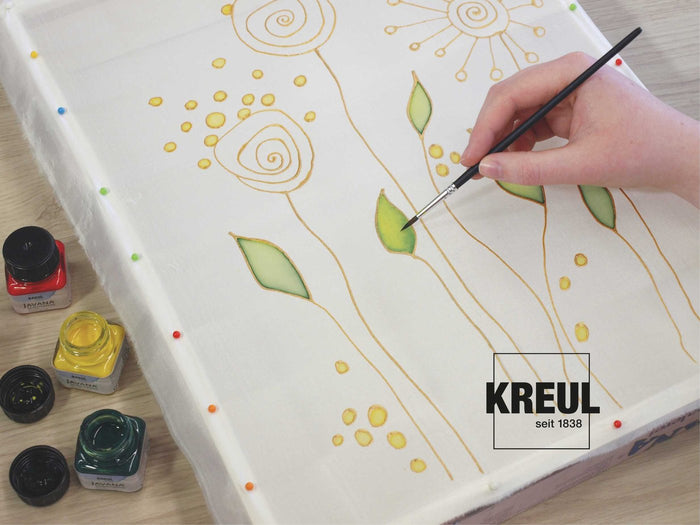
Wash the silk first without fabric softener and dampen it for large areas before painting; the JAVANA paint will then spread evenly. If you are using an outline, first paint water inside the outlined area and add more outline wherever the water runs through. Sprinkling salt onto wet paint creates random patterns, while a stencil or freshly pressed leaves placed on freshly dyed fabric leave a light imprint as it dries in the sun. After about 6 hours, fix the paint in the oven for 8 to 10 minutes at 150 °C, or iron for 5 minutes on the cotton setting through baking paper.
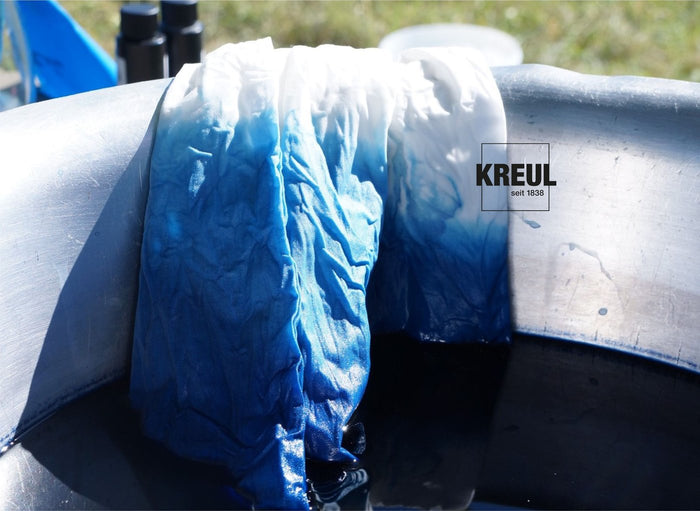
Tie the fabric with elastic bands, cable ties or string, fold it or knot it. Dissolve the dye granules in 1.5 litres of hot water and pour them into a bucket containing 5 litres of warm water; the bath will be about 50 °C. Leave the fabric in the dye bath for at least an hour; in a cooled bath, the time extends to 24 hours. Use a bucket or saucepan that is no longer used for food.
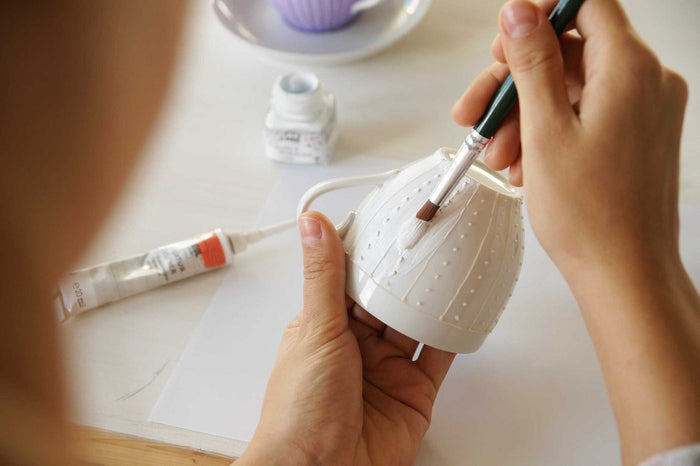
Stir Glass & Porcelain paint several times before use, as the pigments may have settled at the bottom. Wash tableware by hand, preferably with vinegar, and attach your design to glass from the inside with masking tape so you can trace it. After 4 hours of drying, place the tableware in a cold oven, set it to 160 °C with top and bottom heat and no fan, bake for 90 minutes and leave it to cool in the oven. Paint only surfaces that do not come into contact with food; leave the areas you eat and drink from unpainted.
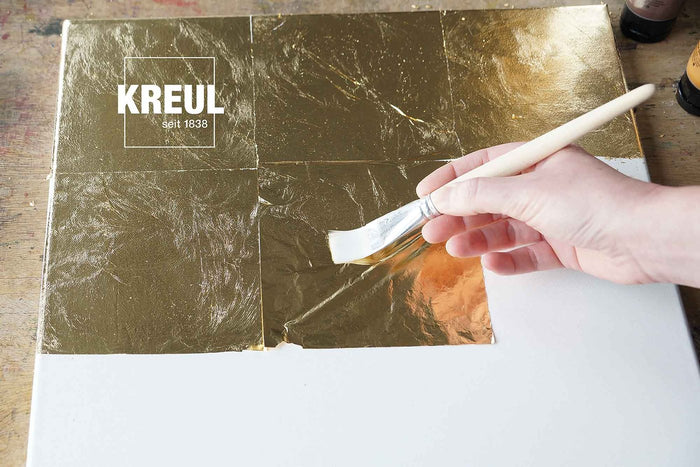
The surface must be clean, free from dust and grease. Apply Anlegemilch adhesive and leave it to dry until it is transparent, for at least 20 minutes. Then place the metal leaf (metallic foil) on top, press it gently with a soft, dry brush and brush away the excess. After at least 12 hours, polish it with a soft cloth. After a few days, protect the work with varnish for metal leaf; outdoors and on concrete, plaster or terracotta, use Zapon varnish.
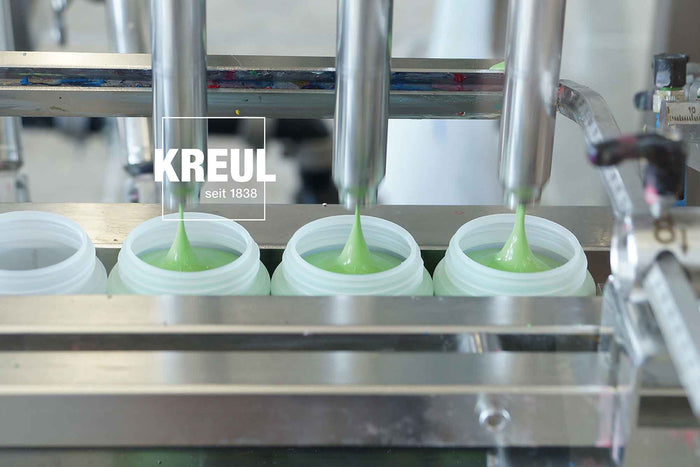
How KREUL paints are madeKREUL company film: a look at paint development and production in this family business.
Pouring with SOLO GOYA Pouring-FluidHow to mix SOLO GOYA Acrylic paints with the medium and pour them onto canvas.A closer look at TRITON Acrylic LiquidFluid acrylic paint that applies easily over large areas and dries to a deep matt finish.
History
From Nuremberg to Hallerndorf
1838The painter Carl Kreul developed a paint-grinding mill and founded Germany’s first factory for artists’ paints in Nuremberg.
1842The company moves from Nuremberg to Forchheim; from now on its machines are driven by the water power of the River Regnitz.
1880Ready-made oil paints begin to be shipped in tubes instead of pigs’ bladders.
1922The factory is bought by Franz Schmidt, great-grandfather of today’s owner, who guides it through inflation and the economic crisis.
1988Gertraud Hawranek takes over the management. Under her leadership, the company moves to a new site in Hallerndorf, and products such as silk paints and Window Color shape the creative sector.
2014Dr Florian Hawranek, the fourth generation of the family, runs the company.
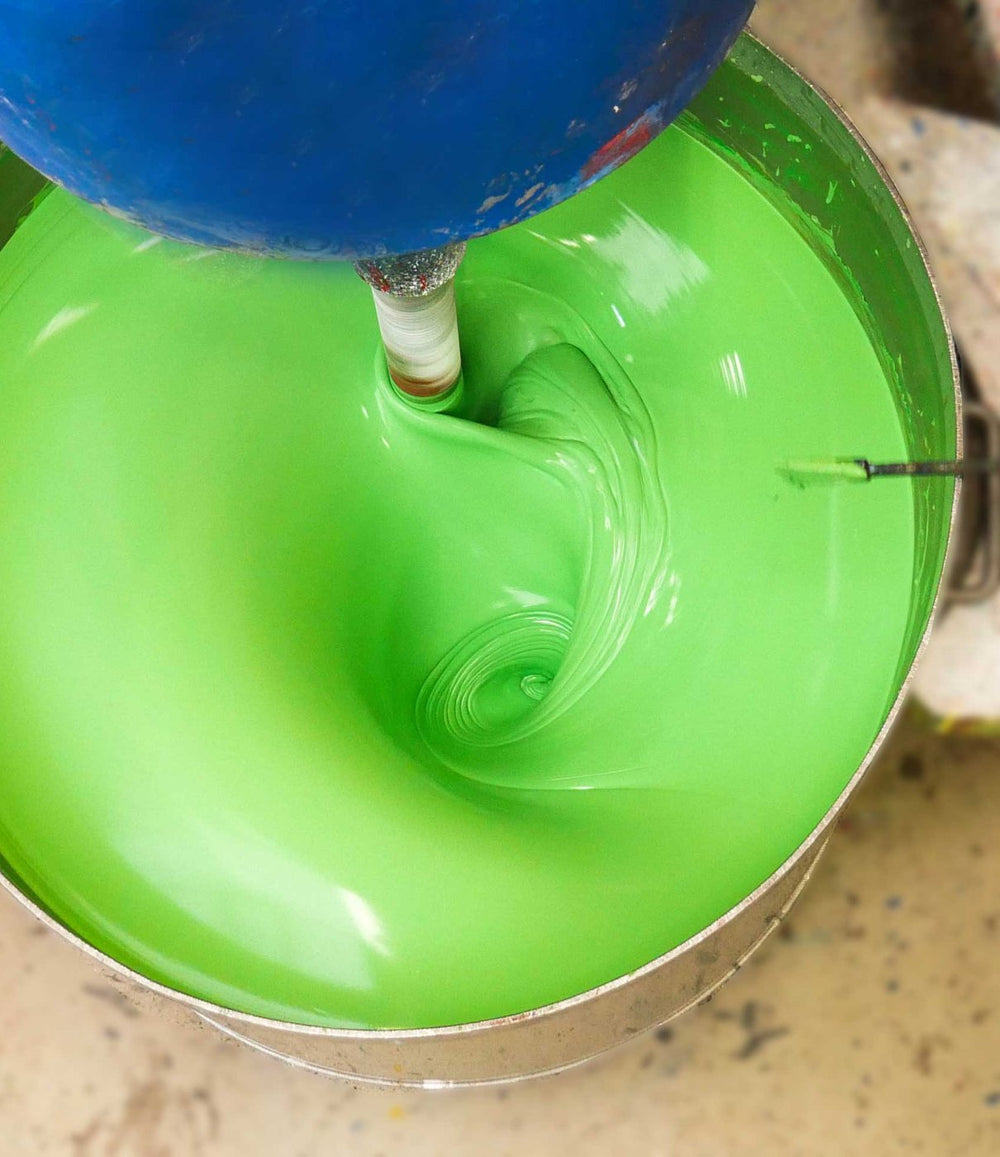
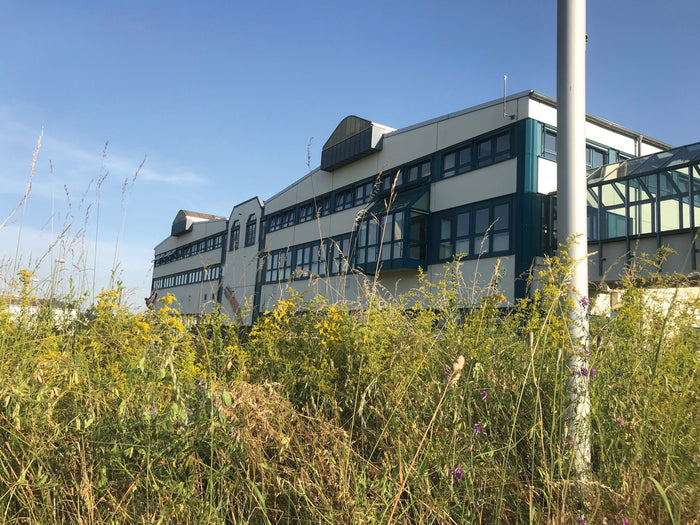
Filling paints in HallerndorfKREUL headquarters in Hallerndorf
About the brand
Germany’s oldest factory for artists’ paints
The painter Carl Kreul developed a paint-grinding mill and, in 1838, founded Germany’s first factory for artists’ paints in Nuremberg. The business has been owned by the family of today’s owners since 1922 and is now run by the fourth generation. Development, production, filling and shipping all take place at one site in Hallerndorf, in the German region of Franconia.
In-house laboratory and production, ISO 9001 certification
Every batch produced is tested and can be traced
More than 5 million packs of paint each year
Several plastic bottles, tubs and markers contain recycled plastic; the cardboard packaging for sets contains recycled material
FAQ
Frequently asked questions about KREUL paints
Are SOLO GOYA, TRITON, JAVANA and MUCKI KREUL brands?
Yes. They are all ranges from C. Kreul GmbH & Co. KG in Hallerndorf and are made at its factory.
Can I eat and drink from porcelain painted with Glass & Porcelain?
Paint only surfaces that do not come into contact with food; leave the areas you eat and drink from unpainted. After 4 hours of drying and baking in the oven (90 minutes at 160 °C), the decoration is suitable for the dishwasher.
How do I fix JAVANA fabric paint?
Wash the fabric first to remove any finish, without using fabric softener. Once dry, iron it for 5 minutes with the iron set to cotton; for paint for light and dark fabrics, iron through baking paper. Then wash it inside out: at up to 60 °C if you used paint for light fabrics, and at up to 40 °C if you used paint for light and dark fabrics.
What is the difference between TRITON and SOLO GOYA Acrylic?
TRITON Acrylic Liquid is fluid, spreads easily over large areas and dries to a deep matt finish. SOLO GOYA Acrylic is creamy and suited to brush painting, and dries matt. el Greco Acrylic is made for glossy impasto painting.
From what age are MUCKI paints suitable?
MUCKI finger paints are for children aged 2 and over. They are dermatologically tested, vegan and wash out easily at 30 °C and above. Bitter substances help protect against accidental swallowing.
How do I make a picture with Window Color paints?
Apply the outline paint to a special film and leave it to dry for about 2 hours. Then fill in the areas and leave the design to dry for 24 hours. Peel the finished design off the film and stick it onto glass, a mirror or tiles. It can be peeled off again without leaving marks.
Can I thin Glass & Porcelain paints with water?
No. Use Glass & Porcelain thinner. Before the decoration has been baked, you can wipe it off with water and start again.
When should I use a fabric marker and when JAVANA paint?
Textil Marker pens are suitable for lines, lettering and details: medium writes on light fabrics without shaking; opaque Opak also works on dark fabrics. For larger areas, use creamy JAVANA paint for light fabrics, or the thicker JAVANA paint for light and dark fabrics for stamping and stencilling.
How do I fix JAVANA silk paint?
After about 6 hours of drying, cover the fabric with a thin cloth or baking paper and iron for 5 minutes with the iron set to cotton; iron larger pieces for longer. You can also fix it in an oven for 8 to 10 minutes at 150 °C using top and bottom heat. If you used colourless gutta for your design, wash it out by hand after fixing.
How should I wash fabric dyed with batik dye?
Batik-dyed fabric is not boil-proof and will fade when washed. Always wash it separately at no more than 40 °C. KREUL fixative helps improve wash fastness: add 20 ml to 1.4 kg of dry fabric in a bucket of warm water, leave the fabric in it for at least 15 minutes, then rinse it thoroughly.
What surfaces can I stick Window Color pictures onto?
Smooth surfaces, for example a window, mirror, tiles or a glass splashback. The design is not painted directly onto the glass, but onto a flexible special film, from which you peel it after 24 hours of drying. Dried Window Color paint will not wash out of clothing.
Can MUCKI finger paints be washed out of clothing?
Yes, MUCKI finger paints wash out well from most cotton and blended fabrics at 30 °C and above. Let the stain dry first, do not soak it, and wash a full load. MUCKI for textiles is an exception: once fixed by an adult, it can be washed at up to 40 °C.
What are TRITON acrylic markers suitable for?
Canvas, paper, cardboard, wood, stone, plastic, metal and glass. The acrylic ink dries to a satin matt finish and is weather-resistant on absorbent surfaces, so it is also suitable for stones displayed outdoors. The markers cannot be refilled with TRITON acrylic paint because they contain ink with a different formulation.
Information: C. Kreul GmbH & Co. KG, Hallerndorf (c-kreul.de), manufacturer’s product sheets and blog, November 2026.